
How to Prepare for a Developer Interview and Stand Out
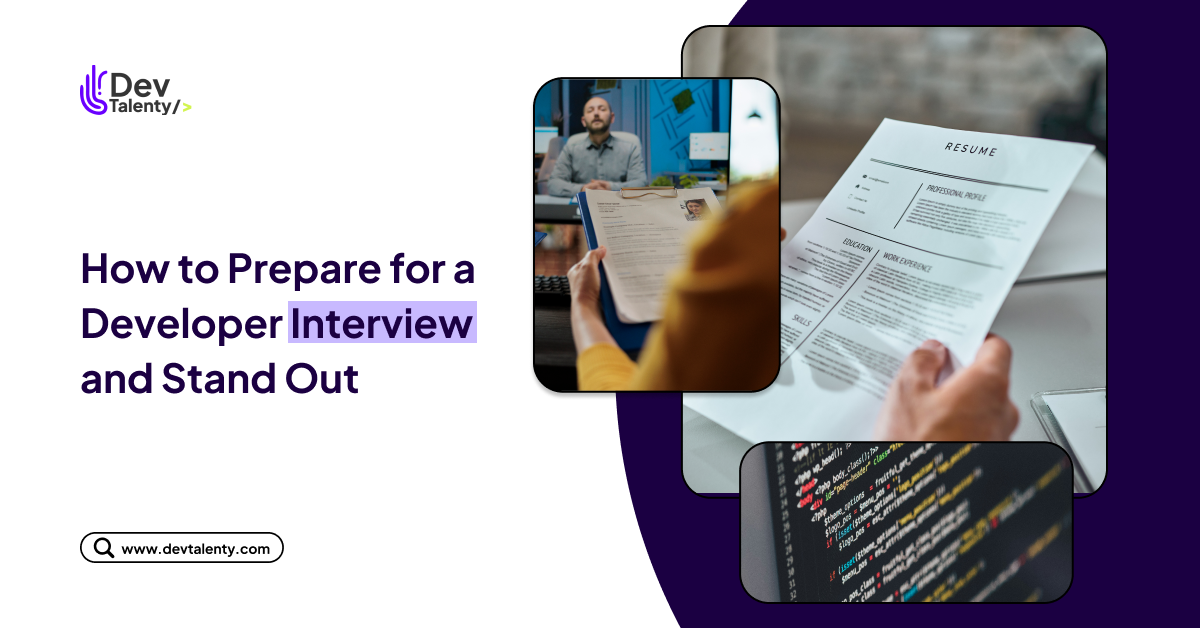
Technical interviews can be challenging, but with the right preparation, you can approach them with confidence. If you’re applying for a developer position, it’s crucial to not only demonstrate your technical knowledge but also your problem-solving skills, communication style, and approach to teamwork.

Here’s a practical guide to help you prepare and really shine during the process:
1. 🔍 Research the Company
Before the interview, take some time to understand:
- What products or services they develop
- What technologies they use (frontend, backend, frameworks, etc.)
- Their culture and working style
This will help you tailor your answers and connect your experience with their stack and way of working.
2. 🧩 Study the Profile They’re Looking For
Carefully read the job description:
- Are they looking for experience with React? Microservices? DevOps?
- Do they mention Agile methodologies?
- Are soft skills like teamwork or technical leadership mentioned?
With this information, you can prepare concrete examples where you’ve applied these skills. The key is to adapt your story to what they value most.
3. 🎯 Use the STAR Technique for Your Responses
A great way to structure your answers is by using the STAR technique:
- Situation: What was the context?
- Task: What did you need to accomplish?
- Action: What did you do to solve the problem?
- Result: What was the outcome?
✅ Example for Developers:
Question: Can you tell me about a time you solved a critical bug under pressure?
STAR Response:
Situation: We were about to launch a new feature in an e-commerce app and discovered a bug that broke the payment flow.
Task: I was responsible for the backend and we needed to fix it in less than two hours.
Action: I reviewed the logs, identified an issue with session token validation, fixed it, and added a unit test to prevent recurrence.
Result: We were able to deploy on time, and we didn’t receive any further reports on that issue. The team recognized me for the speed and clarity of the fix.
💡 This kind of answer demonstrates your technical expertise, problem-solving skills, and ability to work under pressure.
4. ❓ Have Questions Ready to Ask
You’re not just being evaluated; you’re also evaluating whether this company is the right fit for you. Some great questions to ask are:
- How does the development workflow look like?
- What tools do you use for testing or CI/CD?
- Do you have a code review process?
5. 💻 Prepare Your Technical Environment
If the interview is remote:
- Find a quiet place with no interruptions
- Turn on your camera to create a personal connection
- Double-check your microphone and camera before the meeting
- Test your editor, terminal, or any other tool you’ll use
- And most importantly: be on time—join a few minutes early
These small details speak volumes about your professionalism.
6. 🧠 Practice Technical Exercises
- Review basic algorithms and data structures (arrays, strings, trees, hashmaps…)
- Practice on platforms like LeetCode or HackerRank
- If the role is more focused on real-world development rather than algorithmic problems, review architecture, REST APIs, databases, and testing
🚀 MEGA TIP: Use the Job Description as Your Secret Guide
Here’s a golden tip: carefully read the job description and turn every requirement into a possible interview question.
For example, if the description says «experience with Docker and Kubernetes»:
- Think about how you would explain projects where you used them
- Practice explaining how you built a
Dockerfilefrom scratch or deployed something on a cluster - Prepare real examples and frame them around what they value
🔐 This gives you an edge because many of the questions will be directly related to what’s listed in the job description. You’ll already have your answers ready, tailored to what they want to hear.
7. 🤖 Be Yourself (Developer Pro Version)
Besides technical skills, they want someone who communicates well, works as a team, and is eager to learn.
Show genuine interest, ask questions, and if you don’t know something, be honest and explain how you would go about solving it or learning it.

In Summary:
🎯 Study the company and job description
🛠️ Practice your answers using the STAR technique
💻 Double-check your camera, microphone, and environment
⏰ Be punctual, log in a few minutes early
🧠 Practice technical exercises
🧾 Use the job description as your guide
🗣️ Be clear and authentic